
How did they make the arrows fly?
Wildwood made me think of biking around Gijón, then sent me looking for how LAIKA grew its ivy, flew an eagle and gave a puppet a face I couldn’t forget.
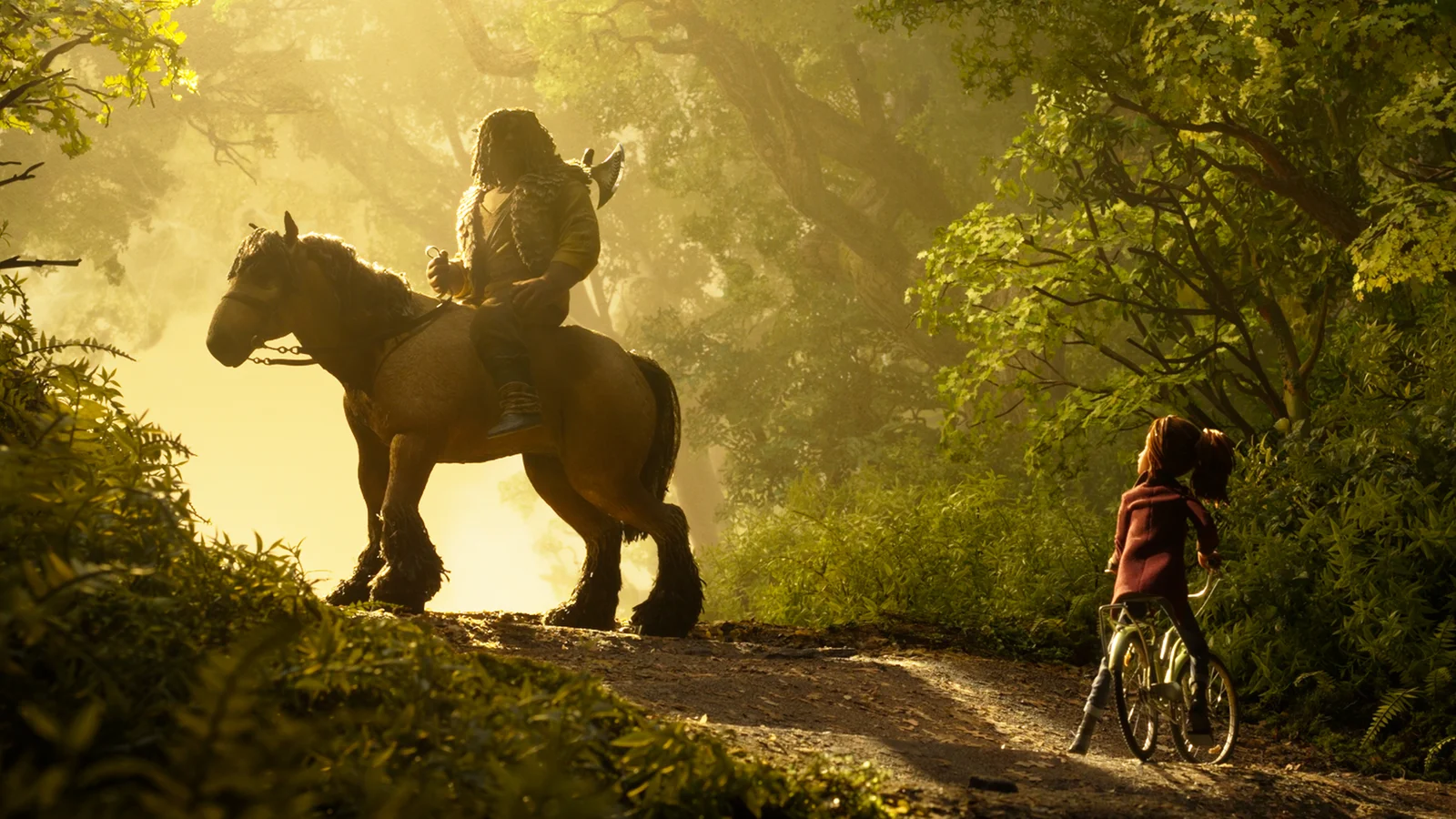
The bike rides around Portland in Wildwood made me think of riding around Gijón. The streets, the cafés, just getting on a bike and going somewhere. I loved how the city felt like this perfect little miniature where nothing could go wrong. Then the movie went into the woods and I spent a good part of it very much hoping everyone would be okay.
I went to see a fantasy movie and came out thinking about ivy. Also hair, a giant bird, the arrows, the catapults exploding. It’s crazy how much of this movie stayed with me. I was scared, then happy, then relieved, then stressed again. And somewhere in there I started wondering how you make a little puppet look like it’s just felt something it doesn’t know what to do with.
The opening still is courtesy of LAIKA. Fathom’s Wildwood press kit
Portland, but you can pick it up
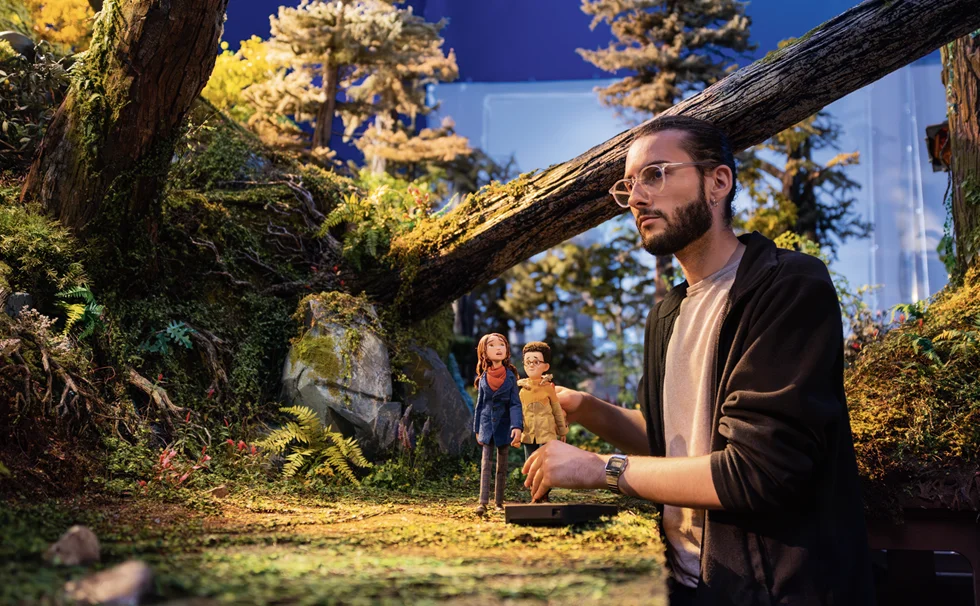
The part I keep coming back to about the woods is that they went outside to figure out how to light the ones they built inside. Cinematographer Caleb Deschanel took some of the miniature pieces into Portland’s Forest Park and photographed them in real light. He could see what the sun actually did to the materials before trying to get the same feeling on a stage. Production designer Nelson Lowry’s team built the physical scenery, and scans of some of those pieces let the effects artists extend the sets digitally with the same textures. LAIKA’s crew on the forest sets
LAIKA also reimagined Portland’s Pittock Mansion for the movie. The featurette shows the real house alongside the work that went into the version on screen. I like that the city gets to be recognizable before the film starts making things up around it. That little stretch of normal life on a bike made the woods feel like somewhere you could actually get to if you took a wrong turn.
How do you make an arrow stay in the air?
It’s the question I left the cinema with. The simple version is that you don’t actually fire it. Lock the camera, take a picture of the empty set, then put a miniature arrow on an adjustable stand. Move it along the path a little at a time and take a photo at each position. The empty shot is called a clean plate, and it gives the compositor a matching background to use when painting out the stand. Where the stand crosses the arrow or casts a shadow, there’s extra cleanup to do. Aardman’s account of rig removal
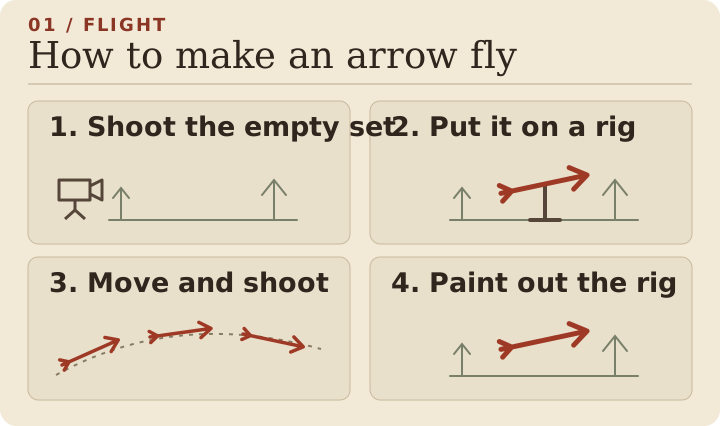
The bit I hadn’t thought about was the space between pictures. Move the arrow farther in the same number of frames and it goes faster. Turn it the wrong way halfway through and my first attempt is probably going to look like an arrow having second thoughts. Animation software can overlay the last frame on the camera’s live view so you can see where the prop was before you move it again. That’s called onion skinning. Dragonframe’s stop-motion guide
The battle is much bigger than a single rig. Deschanel said the main characters in the sequence were stop motion, with digital backgrounds helping fill out the battlefield. He wanted you to keep track of the people you were worried about even as the lighting and fires turned the whole thing into chaos. I remember the catapults going off and somehow still caring a lot more about whether a particular character was about to get hurt. Interview with Caleb Deschanel
The ivy grew backward first
There’s ivy in Wildwood that curls around things in a way I can still picture. I wanted to know how they made it move, and this might be my favorite answer. For one of the movement tests, the team pulled wires out of miniature trees, filmed the wires at 240 frames per second and played the footage backward. A wire slipping out becomes a vine finding its way in. They also tried stop-motion tests and used the physical experiments to develop the motion for the digital ivy. I love that the question of how to make a plant grow faster led to someone figuring out how to pull it out of a tree. Steve Emerson’s VIEW Conference presentation, reported by Cartoon Brew
A bird, some wind and a very good ponytail
The General is a golden eagle and one of the moments I remember most is just seeing her fly. LAIKA built her as a puppet with around 3,000 individual feathers. The tips were wired so animators could pose them. Head of animation Brad Schiff explained that real birds are streamlined enough that their feathers barely move in flight, so the crew gave the feathers a little more movement. They did the opposite with Prue’s ponytail because a realistic amount of flapping would have been distracting. There’s something very funny to me about having to ask the feathers to be more dramatic and the hair to calm down in the exact same shot. Schiff and the puppet team on animating the flight
The face I kept thinking about
There’s one moment in the battle I’ve thought about more than any of the big effects. Spoiler for the battle.
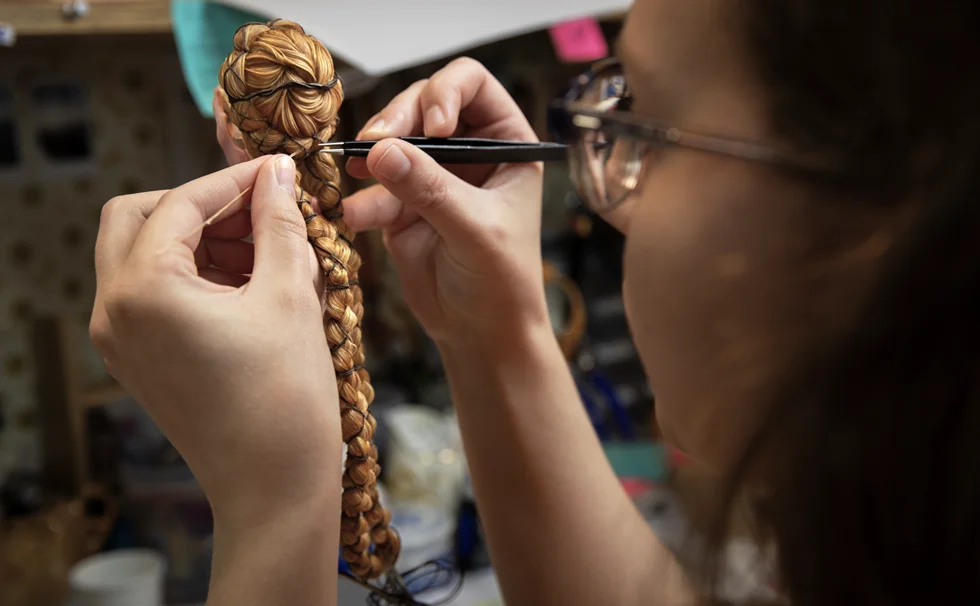
So how do you get that much feeling out of something small enough to hold? One of LAIKA’s tools is replacement animation. Artists plan the change in expression, make the pieces, then swap them onto the puppet as the shot is photographed. Brian McLean, who runs rapid prototyping at LAIKA, showed how a Curtis face has a code on the back telling the animator which frame to put it on and how long to hold it. In some shots they made 24 different faces for a single second of film. Imagine opening a box and finding one second of someone’s face in there. McLean on Wildwood’s replacement faces
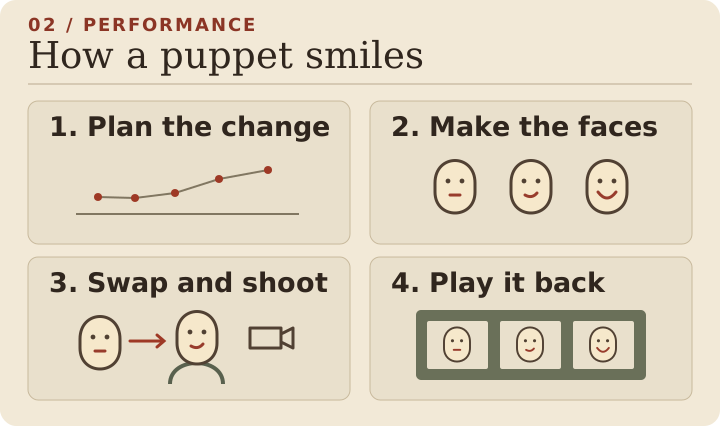
There are other ways to get there. The puppet builders on Guillermo del Toro’s Pinocchio describe putting tiny mechanisms inside some of the heads so animators could adjust expressions a little at a time. And for the General’s eyes, LAIKA could move the eyeball and eyelid independently. That means you can change where she’s looking, or just how long she takes to blink. I started out wanting to know how they move a bird that big, and now I’m also interested in what they do with a single eyelid. The Pinocchio puppet makers at MoMA · LAIKA’s animation team on the General’s eyes
I think I want to try this. A paper arrow and my phone sound manageable. I’d also like to try the bike with two rows of paper trees, moving the close ones a little farther each frame to see if I can make the street feel like it has depth. The face is the one I’d save for last. I want to see whether I can make someone change their mind with just three drawings and a pause.
LAIKA is making movies I think people will come back to for a very long time. I went in for the fantasy and left thinking about how a puppet looked at someone. And somehow I also wanted to get on my bike.
Andrés